Pargo offers a clean answer to a messy South African problem: if couriers cannot find you, cannot get into your building, or simply never reach your area on time, stop asking them to come to your door. Put the parcel in a shop instead. Let the customer fetch it on their own time. Job done.
The appeal is obvious, as is the catch. A parcel that costs a little less to ship can cost more to collect, especially once you count petrol, taxis, parking, and the hour you lose to a trip you did not need to make before online shopping turned your errand list into a roulette wheel.
The promise is simplicity
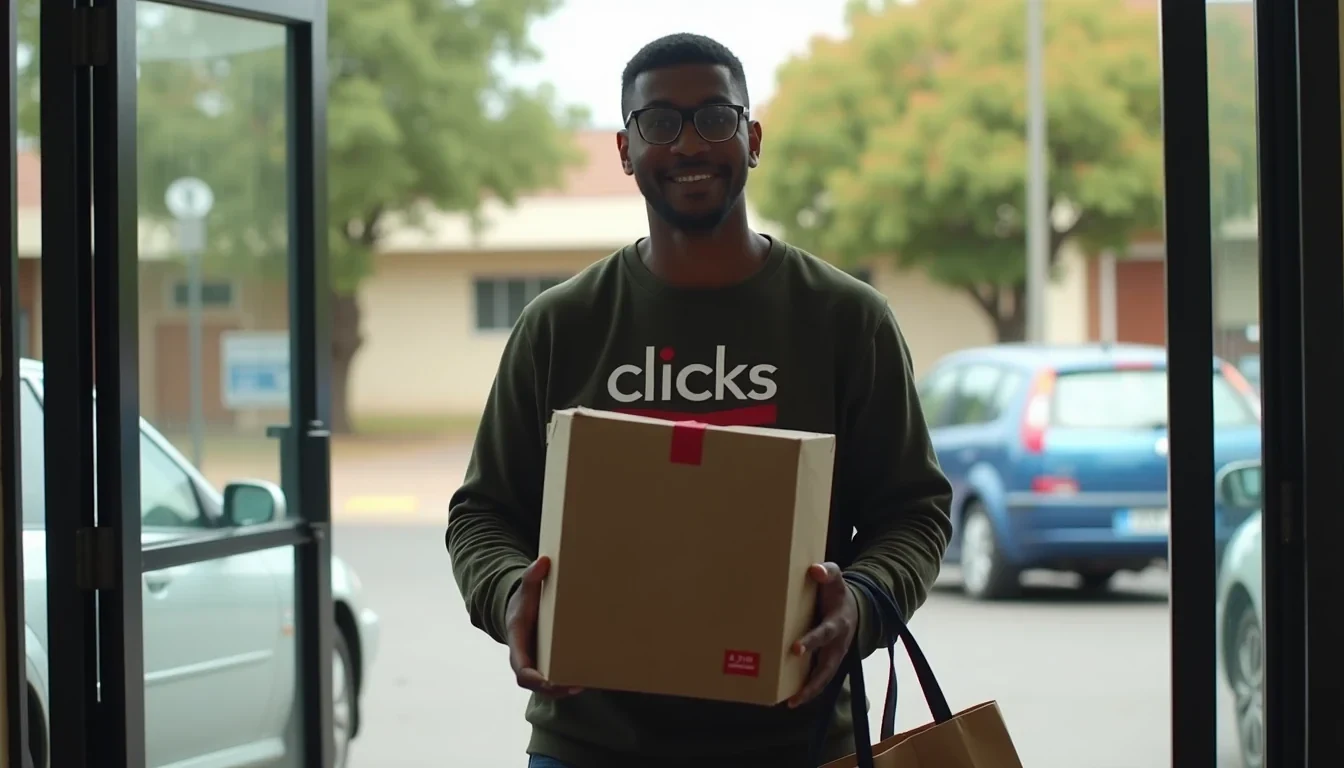
Pargo’s pitch is not clever; that is the point. It takes parcels out of the van game and drops them into places people already visit, from chain retailers to smaller neighbourhood shops. The network now stretches to more than 4 000 pickup points, so the handover can happen at a Clicks, a FreshStop, or a local store that has decided parcels are good business.
Amazon South Africa is using the network too. This pushes Pargo beyond the small online merchants that made the model familiar in the first place. Once a major retailer signs on, the service stops looking like a workaround for niche ecommerce and starts looking like part of the country’s delivery plumbing.
The process is blunt. Choose the collection point at checkout. Wait for the notification. Show the code. Leave with the parcel. There is no missed knock at a security gate, no courier phoning from the wrong suburb, no “we tried to deliver” card stuck to a door nobody opened.
Home delivery still wins on one thing
Door-to-door delivery is still the default because it removes one burden from the customer. You pay, you wait, and the parcel appears at the address you already occupy. When it works, it is the most convenient version of commerce. The driver does the trip; you do not.
That convenience collapses fast in the situations Pargo is built to rescue: apartment blocks without decent reception desks, complexes where couriers cannot get in, township streets where addresses are badly mapped, and secondary towns where routes are patchy and delivery schedules feel improvised. Any of those can turn a simple online order into a chain of phone calls, delays, and reattempts.
Pargo’s real argument is that reliability beats drama. A parcel sitting at a nearby shop is better than a parcel stuck in courier limbo.
The price difference is real, but smaller than it looks
At checkout, Pargo often comes in around R50 to R80. In many cases, that is roughly R10 to R30 cheaper than standard home delivery from the same retailer. On a receipt, that looks like a win.
It is a better deal on the screen than on the road.
A 10km return trip can burn R20 to R30 in fuel. Add parking at a mall or retail centre and the saving evaporates. In urban areas, parking fees of R10 to R20 are normal enough to be annoying and small enough to overlook until they swallow the shipping discount. If you are using taxis or buses, the maths gets uglier. A round trip can run from R30 to R60, which is often more than the difference between collection and delivery in the first place.
Then there is the time. A collection run can consume 30 to 60 minutes once you add the drive, the queue, and the stop itself. That is before the parcel turns out to be larger than expected or the store is busy and the code handover takes longer than the ad copy promised.
The hidden cost is the actual price of moving yourself to where the box lives.
| Factor | Pargo collection | Home delivery |
|---|---|---|
| Upfront shipping fee | Usually R50 to R80 | Often R10 to R30 more |
| Travel cost | Fuel, taxis, or parking | None for the customer |
| Time cost | 30 to 60 minutes for a separate trip | Low if delivery succeeds first time |
| Reliability in hard-to-serve areas | Strong | Often weak |
| Convenience for a home-based customer | Low | High |
The model works best for people who are already moving
Pargo makes the most sense for apartment residents, commuters, and anyone whose day already includes a route past a pickup point.
A commuter can collect on the way home, turning the trip into part of the routine instead of a special event. Someone living in a block with weak security or no proper parcel handling gets a simpler handover. If you work in a place with a desk, a reception area, or a parcel cage nearby, home delivery and collection start to look much the same because the last metre is already managed.
The opposite case is the person working from home near a secure reception desk or a reliable concierge. For that customer, collection starts to look like punishment for no reason. You pay shipping either way, then add a journey for the privilege of standing in a queue to retrieve something that could have been left downstairs.
The same logic applies in reverse for customers outside dependable courier zones. If your street is hard to find, if your address is not cleanly mapped, or if drivers keep skipping the area, Pargo is not a compromise. It is the fix.
Secondary towns and townships are where the model stops looking optional
The network matters more once you move outside the core metro fantasy of neat addresses and predictable routes. In secondary towns and township areas, courier coverage can be uneven and delivery windows can become fiction. A pickup point inside a known store is easier to locate than a delivery point on a street with bad numbering and weak map data.
That does not make collection free. It just changes the problem.
If the pickup point is a short walk away, Pargo feels like a practical local service. If it needs a taxi ride, the bargain starts to wobble. The same parcel can feel cheap in a mall suburb and expensive in a place where transport costs eat into every errand. Convenience is not a single thing. It is geography, transport, and how much of your day you are willing to hand over to logistics.
The handover is controlled, which is the point
One advantage Pargo has over a front-door drop is the handover itself. The parcel sits in a supervised spot until someone with the right code arrives. That cuts down the nonsense around missed deliveries and vague instructions.
It also raises practical questions that home delivery sidesteps. How long does the parcel stay there before it gets sent back? Can someone else collect it if you cannot make it? What happens if the packaging is damaged? How painful is the returns process if the item turns out to be wrong?
Those are not edge cases. They are part of the service.
A proper pickup model has to handle retention periods clearly. A customer who is stuck in traffic, on shift, or away for a few days needs a predictable deadline. It has to allow authorised collection by another person without turning into a bureaucratic scavenger hunt. It has to document damage at handover so the store is not left arguing with the buyer after the fact. And it has to make returns easy enough that the pickup point does not become a dead end the moment something goes wrong.
The claim is right, but narrower than the marketing suggests
Pargo does solve a real problem. It solves the one where a parcel cannot reliably make it to a door because the door is behind a gate, the address is uncertain, or the courier network is uneven. That is a genuine operational fix, and it is smart to build it around existing stores instead of inventing another shiny logistics layer that nobody will maintain.
What it does not solve is the customer’s journey. It just moves the final kilometre from the courier to you.
For the right person, that trade is worth it. For the wrong one, it is a hidden errand wearing a discount sticker. The cleanest use case is not the person who wants everything brought to the sofa. It is the person for whom the sofa was never a realistic delivery destination in the first place.