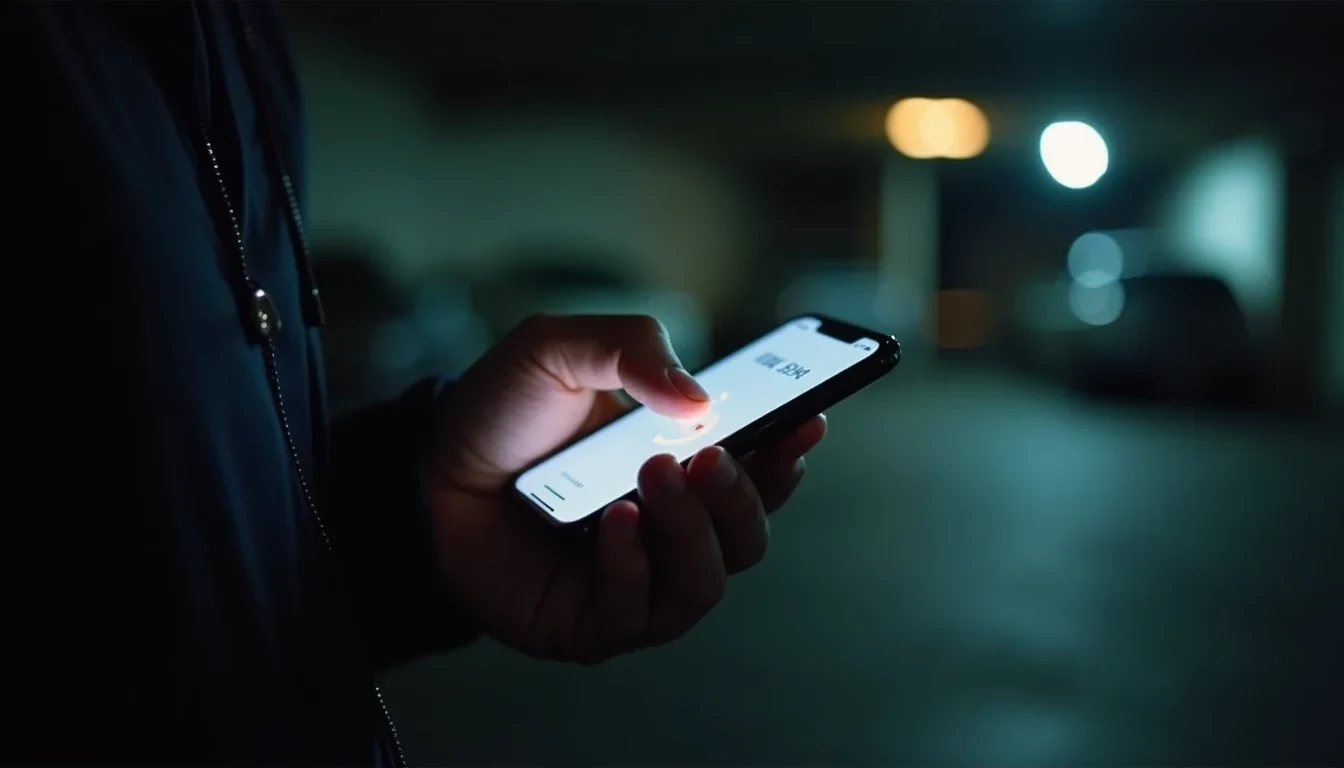
AURA sells a neat idea: you should be able to move through a city without your safety system falling apart the moment you leave your driveway. This is a strong pitch in a country where people do not live inside one fixed perimeter and call it a life. The test is whether the promise still works when the phone is in a pocket, the GPS is sloppy, the signal is weak, and the person who needs help is in a mall basement, a side street in Fourways, or a parking bay in Claremont.
The old model was built for a house. AURA is trying to sell something closer to a person. This sounds like a small change until you look at what has to happen for it to work: a live alert, a verified emergency, a nearby responder with capacity, and a route that makes sense in the real world, not in a pitch deck.
What AURA is actually selling
AURA is not a single-armour, single-vehicle panic button tied to one suburb and one contractor. Its system routes an emergency to a control room, checks it, then pushes the job to an available responder from a wider network of security and medical partners using the caller’s live location.
That is the central claim, and it is a better claim than the usual fixed-address setup. A traditional panic button is usually married to one property and one provider. It works well when the threat arrives at the same address every time. It does very little for the person who is robbed at an ATM, followed out of Rosebank, or feels unsafe while walking to a parking lot after dark.
The low-tech alternative is the family location-sharing app. WhatsApp Live Location, Google Maps location sharing, and similar tools can show a dot on a map. They cannot send armed response, verify a real emergency, or decide whether a medical unit is more useful than a security vehicle. They just hand someone else a position and leave the rest to human improvisation.
AURA’s pitch is that it sits between those two poles, promising active intervention, not passive tracking, with a network rather than a single contracted team.
Which version people can actually get
The cleanest way to judge a safety product is to ask how a normal person buys it.
AURA does have direct consumer access through its app. This is the plainest route for someone who wants the service on a phone without being folded into a larger bundle. The monthly fee is supposed to cover platform access, 24/7 monitoring, and verified dispatch of armed response or medical help when the control room confirms the emergency.
The same technology also lives inside partner products. Samsung users can get access through the SmartThings environment or related device features. Discovery Insure and OUTsurance also fold AURA-linked response into policy or benefit structures. In those cases, the service may be included in what the customer already pays, which changes the value question completely. A service that looks expensive as a standalone subscription can look cheap when it is hidden inside an insurance premium.
This split changes how people talk about the product. Some users buy AURA directly, while others get a version of it through a brand they already trust, whether that is a phone ecosystem or an insurer. Those are not the same purchase, and they should not be judged as such.
The real test is not the brochure
The boldest mistake in personal safety marketing is to focus on response times as if time were the whole story. It is not. A fast vehicle sent to the wrong place is just expensive confusion.
AURA’s useful promise is distributed access. In theory, the platform should be able to find the closest available responder rather than waiting on one company’s nearest patrol car. In dense metros, that can be a genuine edge. Johannesburg, Cape Town, Durban, and Pretoria all have enough private security and medical infrastructure for a network model to make sense, with more partners, more vehicles, and more chances that someone nearby can take the job.
Outside those metros, the picture is rougher. The network thins out. In some places it will be weaker, and in others it may be absent. This part of the pitch gets polished over in ads. Coverage is not the same thing as density, and density is what actually gets a person helped before the situation changes shape.
If there is one thing worth challenging AURA on, it is whether the service remains useful once you leave the inner ring of major city infrastructure. A brand can say it has reach. The harder question is whether it has enough live, nearby capacity to matter on an ordinary Thursday night in a suburb that is not sitting right next to a major responder base.
Where mobile safety starts to wobble
A phone-based safety system lives and dies on friction. The alert has to go out quickly, the user has to be able to trigger it, and the location has to be close enough to reality for dispatch to work.
Weak data is the obvious weak spot. If the connection is patchy, the alert may lag or the live location may update badly. In a city with clogged networks or poor reception, that is not a theoretical glitch; it is the exact condition that turns a safety app into a delay machine.
Then there is the callback problem. Control rooms usually want to verify the emergency, which sounds sensible until the person under threat cannot answer. They may be hiding, their phone may have been taken, they may be injured, or they may simply miss the call while the situation is moving. If verification becomes the gate that stops dispatch, the system can become cautious at the worst possible moment.
GPS is the third trap. A phone can place someone several metres off in ideal conditions, then drift badly among tall buildings or poor satellite visibility. In a city corridor lined with towers, that can mean the difference between the correct building and the wrong block. Once you move indoors, the problem gets worse. A mall, office complex, basement, or multi-storey building can swallow location accuracy. At that point, a responder may know the general area but not the exact floor, entrance, or room.
Battery life is the bluntest failure mode of all. A dead phone turns every premium safety feature into decoration.
A small comparison that strips away the marketing
| Option | What it does | Where it breaks |
|---|---|---|
| Traditional panic button | Alerts one contracted security company tied to a fixed address | Useless once the user leaves that property |
| Family location sharing | Shows a location to chosen contacts | No professional dispatch, slow human relay |
| AURA app or partner service | Verifies and routes an emergency to a nearby responder network | Depends on data, GPS, battery, and responder density |
That table is the whole argument in plain clothes. The old model protects a place. The shared-location app tracks a person. AURA is trying to do both jobs, selling the bridge between them as a category of its own.
What makes the responder matter
The platform is only half the story. The vehicle that arrives is the other half.
AURA says it vets partner companies, which is sensible and necessary. Nobody wants a random badge and a flashing light. Training, licensing, and operational readiness matter. Vetting does not create extra cars in a dead zone, nor does it conjure another medic in a suburb with one active unit already committed. It only helps with quality when a responder is available.
That is why the distributed network idea should be treated with some respect and some suspicion. In a busy metro, it can genuinely improve the odds that someone nearby can take the call. In a thinner area, the network may become a polite way of saying there is not much there yet.
The most honest way to judge the product is not to ask whether it sounds modern. It does. The question is whether it still performs under the conditions that make people panic in the first place. If the alert goes out cleanly, the location is accurate, the callback lands, and a capable responder arrives from a nearby pool, AURA has something useful. If any one of those pieces slips, the promise starts to look less like mobility and more like dependency on a phone behaving perfectly under stress.
The claim worth testing
AURA’s real innovation is not the app. It is the attempt to turn security response into something that follows a person instead of a property.
That is a serious idea, and it deserves serious scrutiny. The fixed-address panic button was built for a world that assumed danger arrived at home. The mobile model is built for a world where the problem might begin in traffic, in a car park, outside a restaurant, or halfway through a commute. That is the right direction, but it is also a harder business to run.
The service will stand or fall on three things: whether people can trigger it fast enough when they are scared, whether the network is dense enough where they actually move, and whether the responder who turns up is useful in the first place. Strip away the branding, and that is the whole bet.